
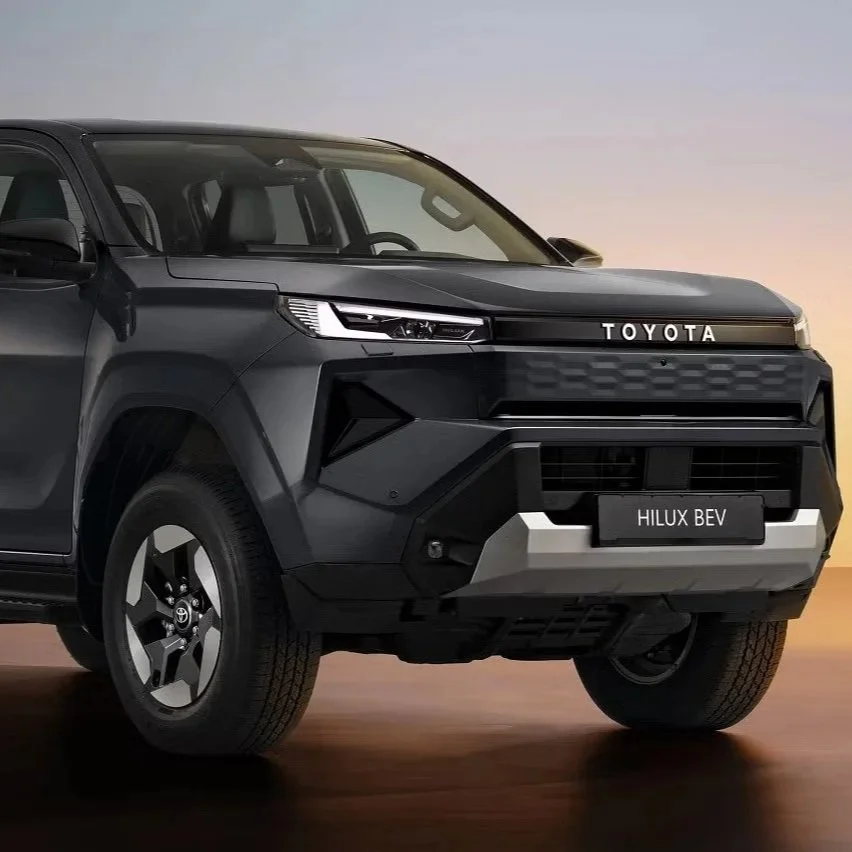
Toyota’s HiLux is going electric, but is this one for tradies?
Toyota’s electric HiLux is no longer a rumour or a joke among die-hard diesel fans. The HiLux BEV is locked in for Australia in 2026, and that puts the country’s favourite tradie ute on a very different path. The big question is simple: can it actually work on site, or is this a HiLux in name only?
Toyota’s electric HiLux is no longer a rumour or a joke among die-hard diesel fans. The HiLux BEV is locked in for Australia in 2026, and that puts the country’s favourite tradie ute on a very different path. The big question is simple: can it actually work on site, or is this a HiLux in name only?
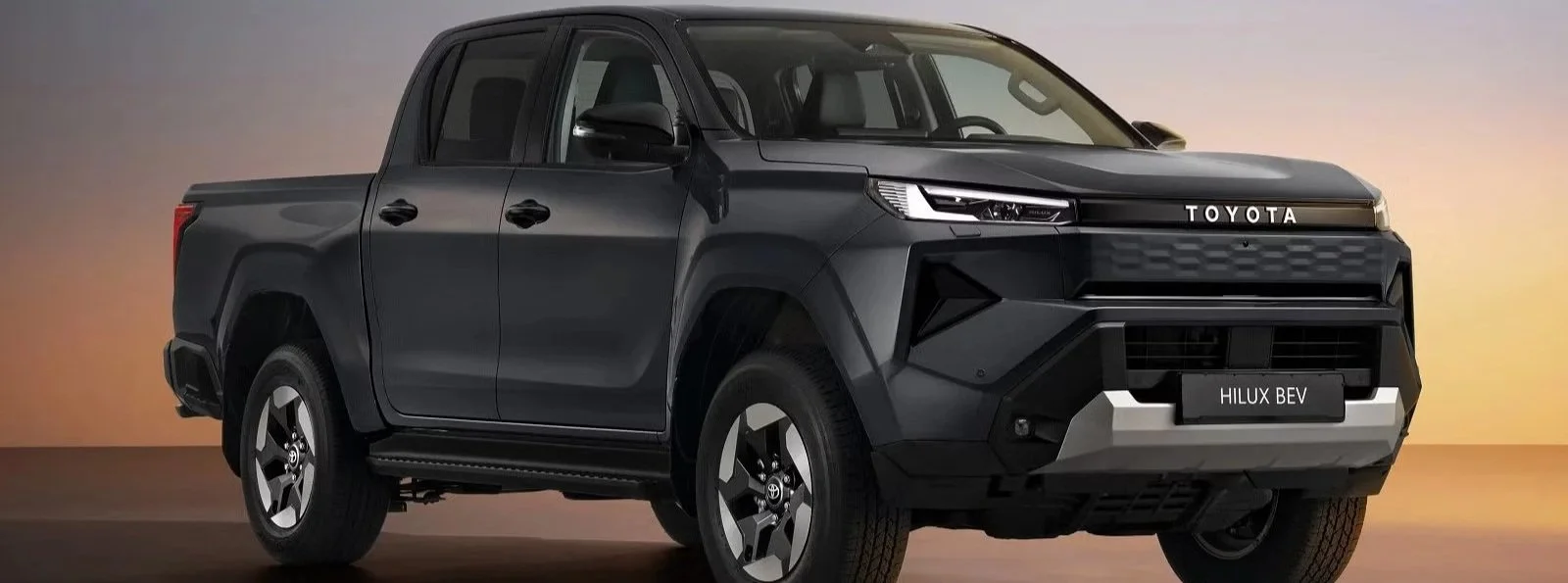
Looks like a HiLux, thinks like an EV.
After years of speculation, Toyota has made it clear the Hilux BEV is part of the new 2026 Hilux generation. The good news is that it keeps the old school ute DNA. It still runs a body-on-frame chassis, the drive is electric, and from the outside it still looks like a Hilux most people would recognise straight away. Toyota knows expectations are sky high and there are plenty of sceptics waiting to be proven wrong.
There are no official prices yet, but no one expects the Hilux BEV to be cheap. Everything points to a price well above the equivalent diesel, which already puts it out of reach for a lot of wallets. On top of that comes the real test, how it handles harsh conditions when driven by people who actually work their utes hard. That part will only be answered with time.
For now, the numbers do the talking
Early figures point to a battery around 60 kWh, with a claimed range of roughly 300 to 315 kilometres on the NEDC cycle. In real-world conditions: tools in the tray, weight on board and Australian heat — that range will drop quickly. That alone shows where this ute is aimed: controlled routes, not long bush runs.
Torque is where the electric setup plays its strongest card. A dual-motor AWD layout delivers more than 470 Nm combined, available instantly from zero. That means immediate shove when pulling away with a load or easing out of a tight site, something any tradie will feel straight away.
Payload sits around 700 kg, with towing estimated close to 2,000 kg. Solid numbers for an electric ute, but still well short of what diesel HiLux buyers are used to.
“The torque hits instantly, but range decides the strategy.”
Electric versus diesel, a clash with the Hilux everyone knows
Put it next to a conventional diesel Hilux and the contrast is obvious. The diesel still offers up to 3,500 kilograms of towing, far longer driving range, and zero concern about whether there is a charger nearby. It remains king for long distances, heavy trailers and days where you just get in and go without overthinking it.
The Hilux BEV trades that for smoothness, silence and instant response, but it demands planning. It is not the ute you hook a big trailer to and drive halfway across the state without a second thought. It follows a different work logic, more structured, more predictable, and far less forgiving of last minute improvisation.
Who does the electric Hilux actually make sense for
Toyota is not hiding the target audience. This Hilux is clearly aimed at back to base use. Fleets, councils, mining operations and large projects with charging infrastructure and defined routes. In that environment, the electric setup offers real advantages that go beyond marketing talk.
For the independent tradie jumping from site to site, living with a trailer on the hitch or relying on the ute as their only workhorse, diesel still makes more sense. The BEV does not replace that role yet.
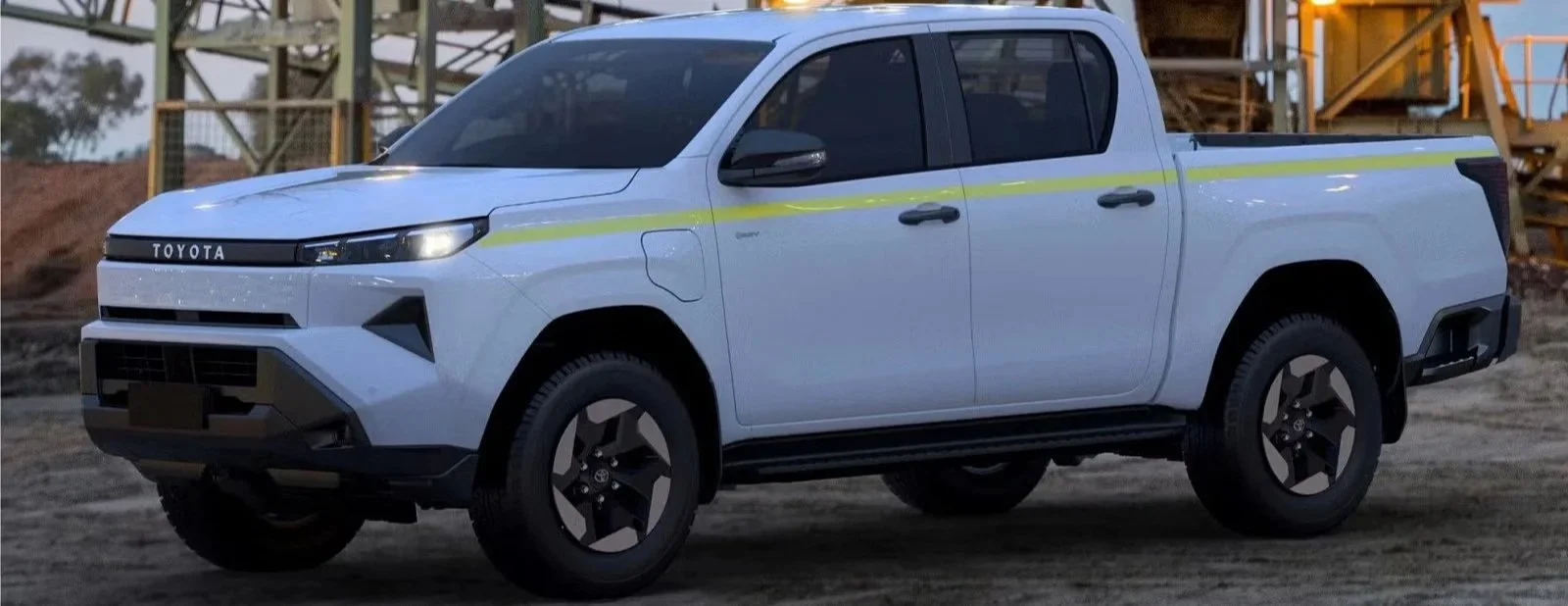
Works best when routes and power are predictable.
Is an electric Hilux actually worth it
This doesn’t feel like a betrayal of the HiLux badge for the sake of trends. It’s a realistic take on what electric power can offer right now — and what it can’t.
It’s still a Toyota, and for many that means safe money. Well built, well thought out, and aimed at a very specific type of work. For some tradies, it’ll be a step forward worth taking. For others, it’ll remain a clever bit of kit they simply don’t need. The HiLux BEV lands in 2026. For now, diesel remains the old faithful on Australian sites.
Trending News






This is not just another project going sideways. This is one of the biggest builds in Australia now drowning in delays, blowouts and claims of straight up sabotage. Billions over budget. Years behind. And now, what came out during the CFMEU inquiry is painting a picture that sounds less like a construction site… and more like chaos.