
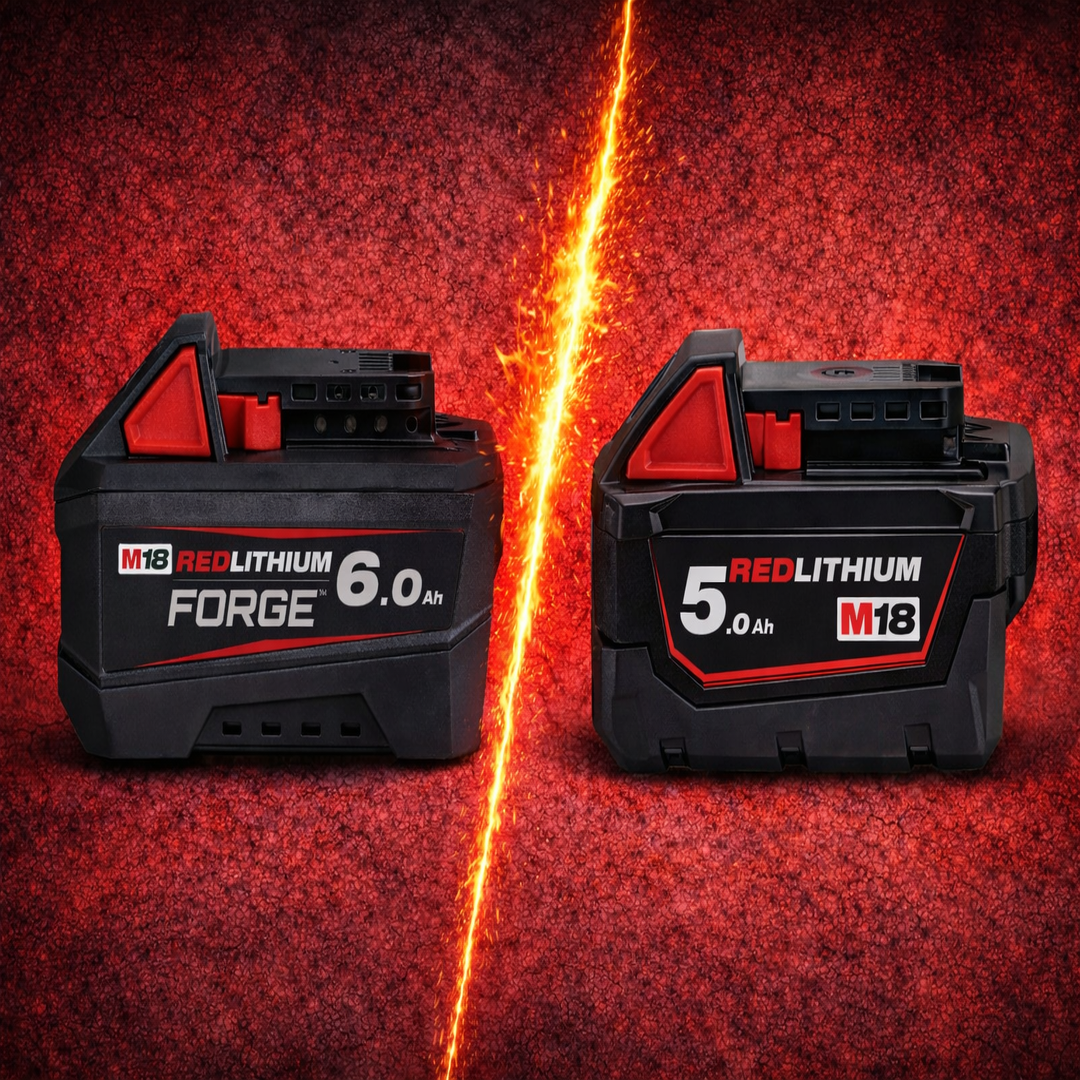
Battery wars aren’t over: 5Ah vs 6Ah packs on real jobsites
Brands love saying the battery war is already won. That everything now runs longer, hits harder and delivers power without drama. On site, the story is a bit different. Between 5Ah and 6Ah packs, the gap isn’t as clear as spec sheets claim. Pick wrong and you’ll feel it in your wrists or your wallet.
Brands love saying the battery war is already won. That everything now runs longer, hits harder and delivers power without drama. On site, the story is a bit different. Between 5Ah and 6Ah packs, the gap isn’t as clear as spec sheets claim. Pick wrong and you’ll feel it in your wrists or your wallet.
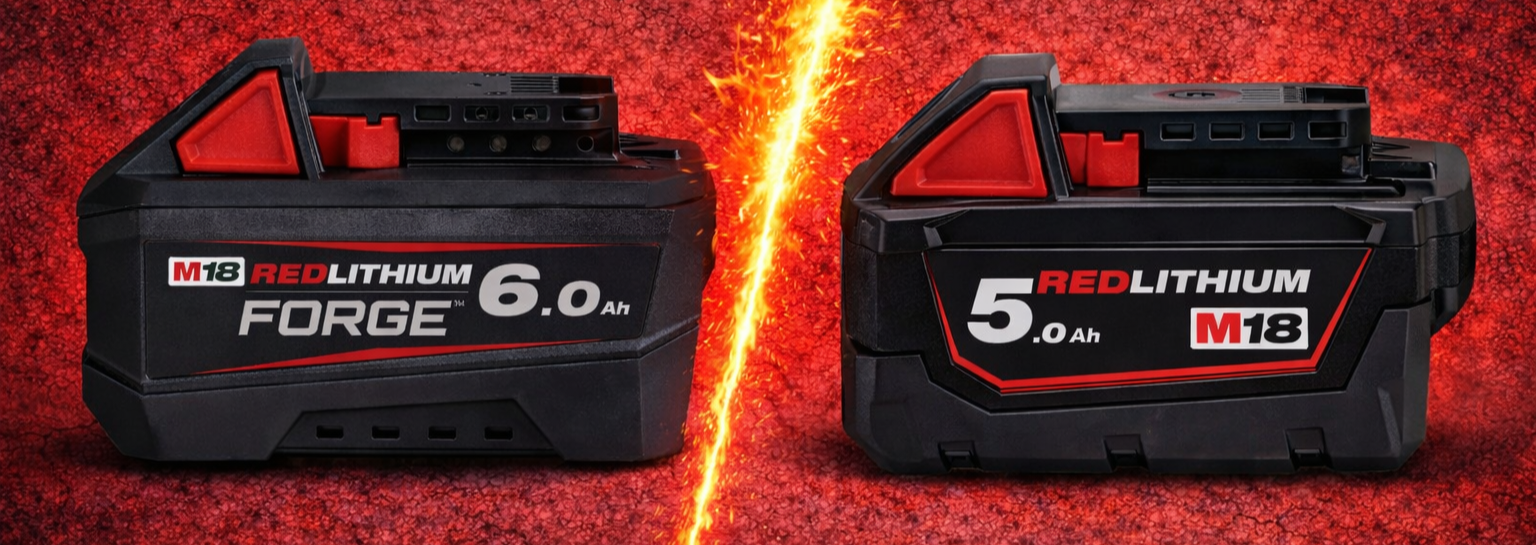
Two battery sizes, very different outcomes once the work starts.
On paper, the logic sounds bulletproof. More amp hours means more runtime. Add the industry-wide push toward 6Ah packs as the new “standard”, and it’s easy to see why plenty of tradies default to bigger must be better.
But site life doesn’t run on lab tests. Most tradies aren’t grinding nonstop for eight straight hours. The day is stop-start. Different tools, different tasks, constant movement. And in that rhythm, the real-world difference between 5Ah and 6Ah gets messy fast. That clean marketing line starts to blur once boots hit the ground.
Where the 6Ah actually earns its keep
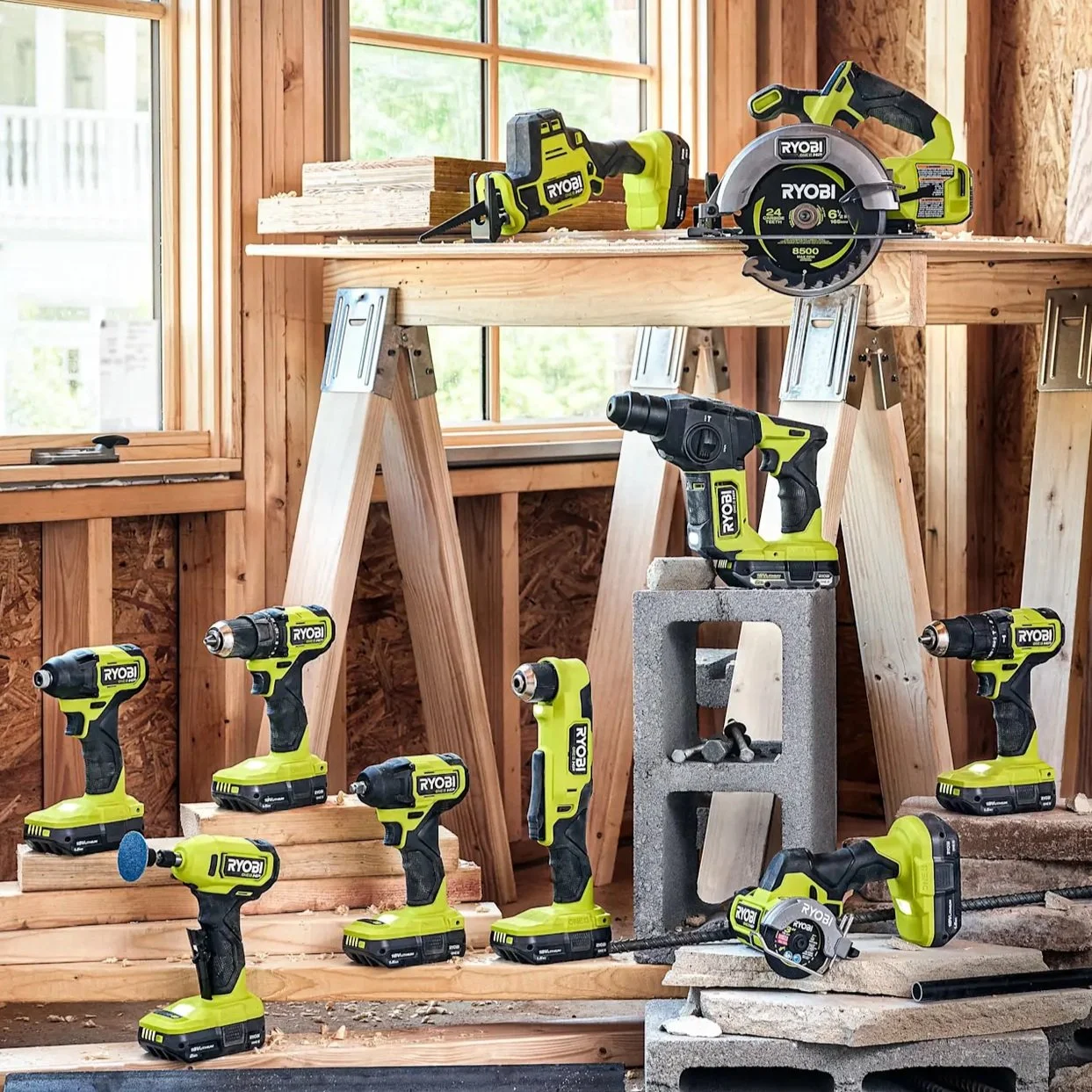
On tools that demand constant current, the 6Ah pack does show its teeth. Grinders, circular saws and recip saws pushed hard for several minutes at a time tend to hold RPM better with the larger pack. Less bogging down, less heat build-up, and a few extra cuts before you need to swap batteries.
In those cases, the 6Ah isn’t just marketing fluff. It’s a real advantage, especially when the work is heavy and continuous. That’s where smaller packs start to feel out of their depth, not because they fail, but because they were designed for a different kind of use.
Where the 5Ah still hits the sweet spot
Put that same 6Ah on a drill driver or an impact for everyday tasks, and the story changes. Light drilling, fastening and general site work shrink the real-world gap fast. In most cases, the motor and electronics become the limiting factor long before the battery does.
That’s where the 5Ah keeps shining for one simple reason: weight. Less weight means less strain on wrists and shoulders, better control, and a tool that feels nimble all day. For many tradies, that balance matters more than squeezing out a few extra minutes of runtime.
“More battery doesn’t automatically mean a better day on site.”
The factor no one sells: accumulated fatigue
The extra weight of a 6Ah barely registers at 8am. By 4pm, it’s keeping score. Especially when the tool lives on your belt, gets used overhead, or when the pace ramps up because deadlines are tight.
That’s why plenty of tradies end up running a smart mix. 5Ah packs for daily drivers, 6Ah reserved for tools that genuinely need the extra juice. Big batteries for big jobs. Simple logic.
The site verdict
The battery war isn’t over. It’s just stopped being about bragging rights. The 6Ah has its place and delivers when the work is heavy and constant. The 5Ah remains the quiet workhorse that gets most tradies through most days without wrecking their shoulders.
At the end of it, this isn’t about chasing the biggest number on the label. It’s about knowing what you actually do all day and matching the battery to the tool, not your ego. On site, the best battery isn’t the biggest one. It’s the one that still feels right when the sun’s low and the job’s not done yet.
Trending News



This is not a story about wealthy people whinging over expensive finishes. This is about ironclad contracts, untouchable builders and a client who says he was left with a rubbish penthouse and then threatened on top of it. The video has already gone viral, and what it shows is hard to ignore while the whole industry watches. This is exactly the kind of yarn that gets passed around on smoko, coffee in hand.