
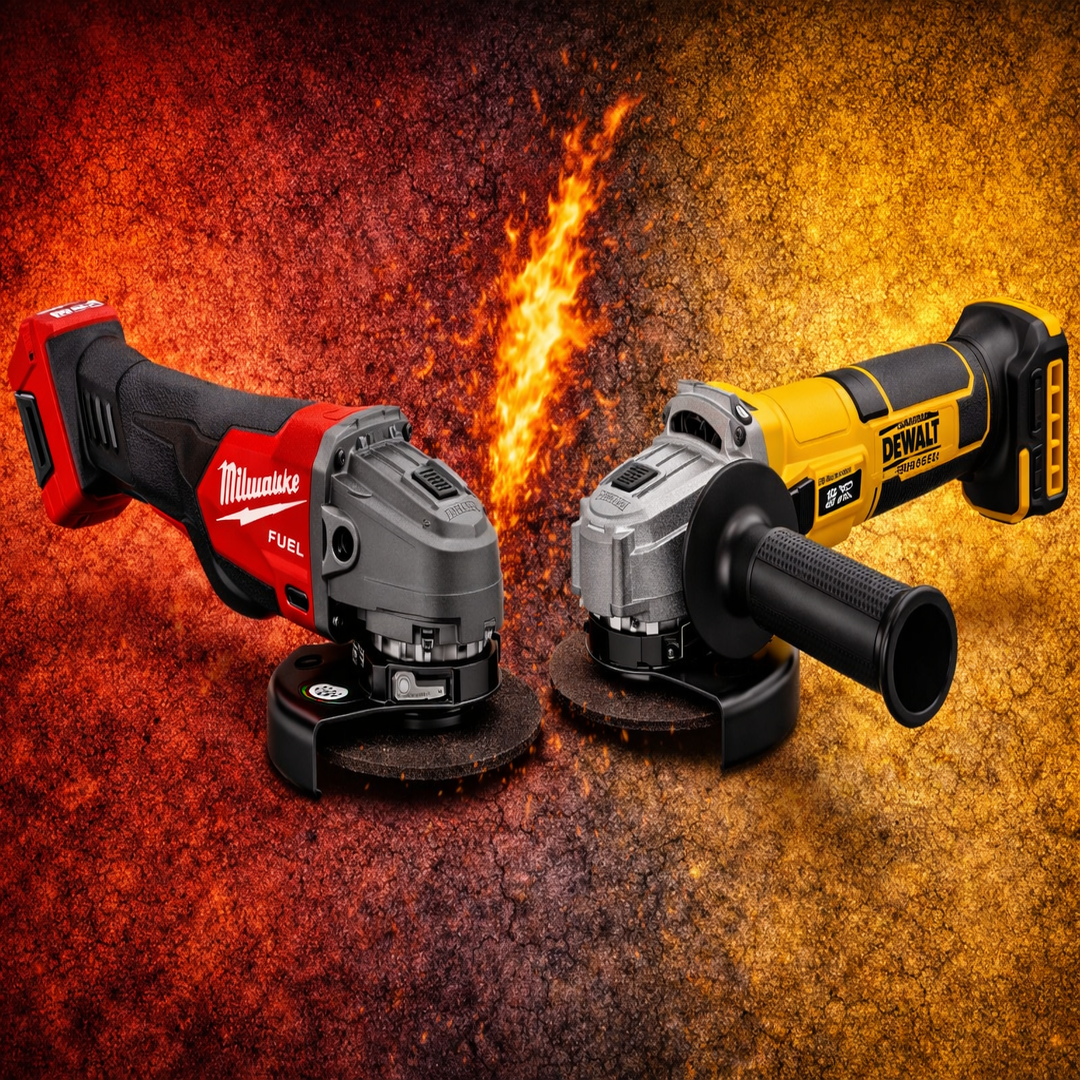
DeWalt XR vs Milwaukee FUEL grinders: same discs, very different fight on site
A grinder is a grinder. No mystery there. Same weapons on the table here: a 125 mm disc, 18V batteries and enough power to cut for a good while. But on site, as always, the story changes. In this DeWalt vs Milwaukee face off, even with the same disc fitted, they feel like two very different tools from the first pull of the trigger.
A grinder is a grinder. No mystery there. Same weapons on the table here: a 125 mm disc, 18V batteries and enough power to cut for a good while. But on site, as always, the story changes. In this DeWalt vs Milwaukee face off, even with the same disc fitted, they feel like two very different tools from the first pull of the trigger.
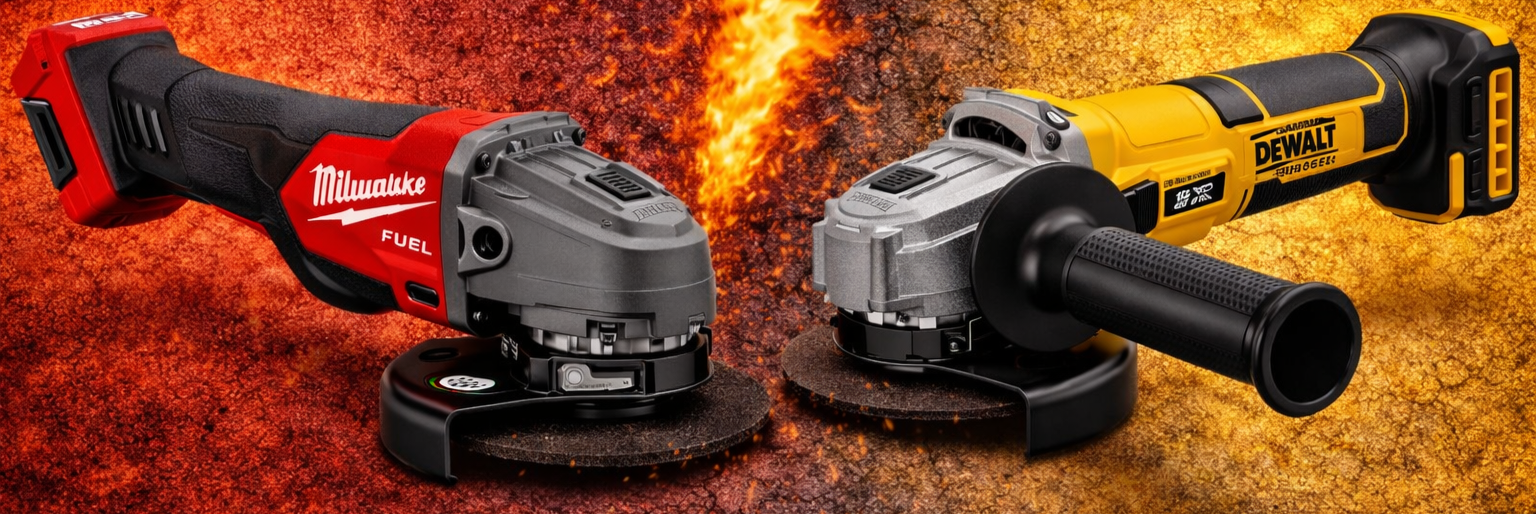
Same disc fitted. Very different personalities once the cutting starts.
For this VS, the contenders are clear. DeWalt steps in with its XR 18V brushless 125 mm grinder, the DCG405. Milwaukee answers with the M18 FUEL 125 mm, including versions with brake and variable speed. Both are built for real jobsite use, not for sitting clean in a garage.
The difference is not disc size or marketing talk. It is about how they deliver power and how they behave when the job gets rough. The clash between brute force and versatility shows up quickly once the cutting starts.
Power delivery: shove vs control
DeWalt XR runs at around 9,000 rpm no-load. Nothing flashy, but it delivers power progressively. When you’re grinding steel or cutting for extended stretches, that smooth ramp-up makes the tool easier to live with. It feels measured, predictable and easier to keep on line.
Milwaukee FUEL comes out swinging. With aggressive electronics and strong low-end torque, it hits hard from the moment you pull the trigger. Push the cut or rush the job and the grinder responds instantly. That punch is useful when you need to get through tough material fast, but it also demands respect.
“Both cut steel. One fights you less over a full day.”
Brakes, confidence and late-day fatigue
This is where site reality kicks in. Milwaukee’s RAPIDSTOP brake does exactly what it promises, cutting power almost instantly when you let go. On heavy jobs, especially late in the day, that sharp response builds confidence. You feel like the tool has your back.
DeWalt XR takes a calmer approach. Its electronic brake and soft start aren’t as dramatic, but they’re consistent. Less snap, fewer surprises. Over a long shift, that predictability means fewer corrections and less strain building up in your wrist and forearm.
Battery use and fatigue, where long days are won
In real use, both grinders chew through batteries when pushed, but they do it in different ways. The FUEL rewards fast punch, making it great for short, hard cuts. The XR tends to hold up better during steady, continuous work without those aggressive bursts.
After hours of cutting and grinding, that difference is felt more in the wrist than on a spec sheet. In terms of battery life, they end up fairly even overall, responding differently to work peaks. Call it a well earned technical draw.
So which grinder actually wins on site?
Milwaukee FUEL hits hard and does not ask for permission. You feel it straight away. But when the day stretches out, that initial punch can turn into fatigue. This is where DeWalt XR plays the smarter game. Power delivery stays consistent, control remains easier and your arm feels the difference after hours on steel.
Same disc. Same job. But on real worksites — the kind that run all day — the XR fights less and lets you work more. This round, it takes the point.
Trending News





This is not a story about wealthy people whinging over expensive finishes. This is about ironclad contracts, untouchable builders and a client who says he was left with a rubbish penthouse and then threatened on top of it. The video has already gone viral, and what it shows is hard to ignore while the whole industry watches. This is exactly the kind of yarn that gets passed around on smoko, coffee in hand.